
How quickly does clean ammonia viability collapse when hydrogen supply and continuous synthesis drift out of temporal alignment?
Problem statement: This Product B note begins where parity mapping ends. It stress-tests the parity-positive region by introducing temporal mismatch, buffer limits, and utilization erosion to determine whether parity persists under realistic operating behavior.
Most techno-economic results are conditionally true and operationally unattainable without constraint validation.
Temporal mismatch converts low-cost energy into high-cost product.
Dependency rule: This note should be read with the companion Product A parity note. Product A asks, "can parity exist?" Product B asks, "does that region survive temporal reality?"
This note uses source-validated benchmark and policy-traceability inputs in the local repository, with deterministic collapse algebra for decision screening.
DG-PFF Application Marker
- Parity condition: imported from Product A (
Net LCOA_clean <= benchmark).- Fragility condition: parity persistence under temporal mismatch and utilization degradation.
- Collapse boundary: minimum effective synthesis utilization required for parity under stated benchmark/credit assumptions.
- Parity persistence rule: Parity without persistence is not viability.
Decision Summary (Threshold Output)
- GO:
CF_eff >= ~85%, temporal penalty<= ~$20/tonne, support>= ~$150/tonne. - CONDITIONAL: case remains at or above
CF_eff_min = 270/(Benchmark + Policy_Credit - 450 - Temporal_Penalty). - NO-GO: any case below
CF_eff_min, or temporal penalty> ~$40/tonneunder<= ~$100/tonnesupport enters Temporal Decoupling Failure Regime.
Clean ammonia viability is governed by temporal alignment between hydrogen production and continuous synthesis demand. Below ~65% electrolyzer capacity factor, temporal mismatch forces either storage scaling or synthesis underutilization, both of which introduce compounding penalties. These penalties eliminate the apparent advantage of low-cost electricity and contract the viable region to a narrow band of high-utilization, partially firmed power conditions. This defines the Temporal Decoupling Failure Regime.
Product B: Decision Brief (3-Minute Screen)
The following configurations fail this Product B persistence screen and should be treated as immediate no-go unless the operating structure changes:
- Utilization below support-tier thresholds at near-zero mismatch penalty. Under benchmark
~$650/tonne(illustrative import-dependent delivered basis), persistence fails below approximately~77%at~$150/tonnesupport and below approximately~90%at~$100/tonnesupport when temporal penalty is near zero. - Low support with moderate mismatch. At realized support
<=$100/tonne, moderate temporal penalties push required utilization toward near-continuous operation and remove economic margin. - High temporal penalty under low/moderate support. If mismatch penalties exceed
~$40/tonneunder<=$100/tonnesupport, parity persistence is invalidated in this setup.
Structured Go/No-Go output
| Status | Trigger condition | Decision handling |
|—|—|—|
| Go | Effective synthesis utilization >= ~85% with temporal penalty <= ~$20/tonne and support >= ~$150/tonne at benchmark ~$650/tonne | Proceed to project-specific dispatch/storage diligence. |
| Conditional Go | Support ~$150/tonne: utilization >= ~87% with temporal penalty ~$20-$40/tonne; Support ~$100/tonne: utilization >= ~93% with temporal penalty <= ~$10/tonne; and case satisfies CF_eff >= CF_eff_min from Eq. CF_eff_min = 270 / (Benchmark_Ammonia + Policy_Credit - 450 - Temporal_Penalty) | Proceed only with contracted buffer strategy and downside-case underwriting. |
| No-Go | Any case with CF_eff < CF_eff_min; Support ~$150/tonne: utilization < ~77% at near-zero temporal penalty; Support ~$100/tonne: utilization < ~90% at near-zero temporal penalty; any case with temporal penalty > ~$40/tonne under <= ~$100/tonne support | Do not proceed until mismatch architecture is redesigned. |
Viability Thresholds (Product B)
| Boundary | Hard threshold (screening) | Decision implication |
|—|—|—|
| Utilization floor | CF_eff >= CF_eff_min = 270 / (Benchmark + Policy_Credit - 450 - Temporal_Penalty) | Falling below this line invalidates persistence. |
| Low-support mismatch cliff | At <= ~$100/tonne support, temporal penalty > ~$40/tonne is collapse-prone | Cases move into infeasible utilization requirements. |
| Near-zero mismatch floor | ~90% CF floor at ~$100/tonne support; ~77% at ~$150/tonne support | Support tier determines whether persistence is even achievable. |
| Infeasibility boundary | CF_eff_min > 100% | No operating strategy can preserve parity under stated assumptions. |
DG-PFF Execution Trace
- Parity condition imported from Product A against delivered benchmark ammonia cost (illustrative import-dependent delivered basis used in this release).
- Product A viability region stress-tested under temporal mismatch and utilization degradation.
- Fragility quantified through minimum effective-utilization thresholds by support tier.
- Collapse boundaries identified where persistence fails (including infeasible utilization requirements).
- Go/No-Go handling produced with support-tier-specific utilization triggers.
Temporal Decoupling Failure Regime (Named Failure Mode)
Temporal Decoupling Failure (Utilization Collapse Regime): parity-positive cases from Product A collapse when required CF_eff rises faster than realizable synthesis utilization under temporal mismatch and support degradation.
Core decision question
What minimum effective synthesis utilization is required to preserve parity after temporal mismatch penalties are introduced?
Capital Lock-In Risk
- Electrolyzer production can flex with power shape.
- Haber-Bosch synthesis economics depend on sustained high utilization.
- Temporal mismatch converts a flexible upstream asset into a rigid capital utilization problem downstream.
Intermittency is not an operating issue. It is a capital efficiency problem.
Decision owner and timing
- Decision owner: Project developer, lender downside team, investment committee.
- Decision timing: Before storage sizing lock, dispatch contract lock, and financing close.
Confidence / robustness tag
Confidence: Medium (deterministic collapse algebra with source-validated benchmark/policy inputs and explicit calibration structure; scenario-specific reruns remain required for alternate basis assumptions), benchmark run dated April 10, 2026.
Structural Claim
The parity-positive region imported from Product A is structurally fragile under temporal mismatch: utilization requirements rise nonlinearly with penalty load, and low-support cases cross infeasibility boundaries quickly.
Cheap electricity without utilization is a trap, not an advantage.
Constraint Statement (DG-PFF)
If CF_eff < CF_eff_min = 270 / (Benchmark_Ammonia + Policy_Credit - 450 - Temporal_Penalty), parity persistence fails and the case is non-viable under this Product B specification.
Product B: Technical Note (Audit Trail)
1. Decision Context
This note is the persistence stress layer for the ammonia parity boundary defined in Product A. It determines whether parity survives temporal mismatch and utilization erosion under explicit support assumptions.
2. Analytical Lens (DG-PFF)
- Parity condition:
Net LCOA_clean <= Benchmark_Ammonia(imported from Product A). - Fragility condition: persistence of parity under temporal penalty and utilization stress.
- Decision principle: parity without persistence is not viability.
3. Collapse Algebra
Using a deterministic decomposition consistent with current source-input baselines:
- Benchmark ammonia assumption used in illustrative thresholds:
~$650/tonneon an import-dependent delivered basis (not US Gulf/Middle East normalized spot basis). Policy_Creditrepresents realized support value (for example, 45V pass-through equivalent, LCFS-linked credit value, or bilateral contract premium).- Baseline clean ammonia anchor:
~$750/tonne - Approximate fixed-cost block at reference operation:
F ~= $300/tonne - Approximate variable-cost block:
V ~= $450/tonne(includes H2 fixed at central case~$2.50/kg, i.e.,176 * 2.50 ~= $440/tonne, plus non-H2 variable costs) - Reference effective utilization:
CF_ref = 0.90
Cost form:
Net LCOA_clean ~= V + F * (CF_ref / CF_eff) + Temporal_Penalty - Policy_Credit
             ~= 450 + 300 * (0.90 / CF_eff) + Temporal_Penalty - Policy_Credit
Parity persistence condition:
450 + 270/CF_eff + Temporal_Penalty - Policy_Credit <= Benchmark_Ammonia
Minimum utilization threshold:
CF_eff_min = 270 / (Benchmark_Ammonia + Policy_Credit - 450 - Temporal_Penalty)
Temporal Penalty Stack (Explicit)
Temporal_Penalty_total
  ~= P_storage_capex
   + P_storage_losses
   + P_curtailment_or_replacement
   + P_turndown_inefficiency
   + P_restart_and_cycling
- Storage CAPEX
- Storage losses
- Curtailment
- Turndown inefficiency
- Cycling penalties
These penalties compound and scale nonlinearly with intermittency.
- The dominant failure pathway is the combined rise of storage burden plus utilization dilution.
- Under low/moderate support, this decomposition pushes
CF_eff_minabove feasible operating ranges. - Component mapping is anchored to
ammonia_temporal_penalty_decomposition_template.csvand linked hourly profiles.
4. Illustrative Collapse Outputs
- Benchmark
~$650/tonne, support~$150/tonne, temporal penalty~$0/tonne:CF_eff_min ~= 77.1%
- Benchmark
~$650/tonne, support~$100/tonne, temporal penalty~$0/tonne:CF_eff_min ~= 90.0%
- Benchmark
~$650/tonne, support~$100/tonne, temporal penalty~$40/tonne:CF_eff_min ~= 103.8%, indicating an infeasible utilization requirement and collapse under this setup.
Interpretation: Temporal penalties compound nonlinearly, collapsing the apparent parity region into a narrow or non-existent viable domain. Once temporal penalties are introduced, the viable region contracts to a narrow band of high-utilization, partially firmed power conditions.
Ammonia economics are not hydrogen economics. They are synchronization economics.
Figure 1 - Collapse Boundary Map
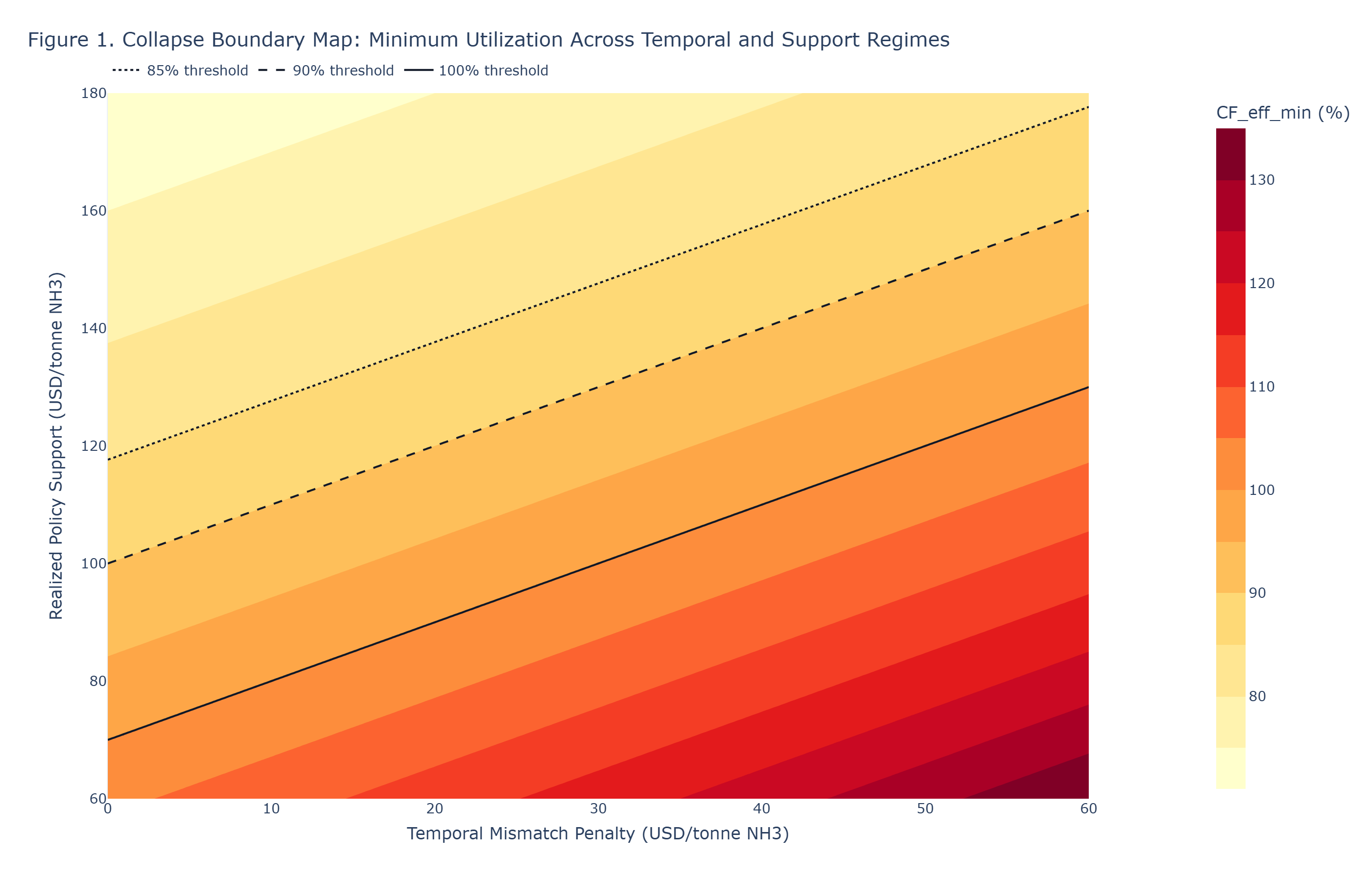
Figure 1: Collapse boundary map of utilization requirement versus temporal mismatch penalty across support tiers.
Decision statement
- The persistence boundary rises sharply with penalty load under low/moderate support, collapsing apparent Product A headroom.
Figure 2 - Minimum Utilization by Support Tier
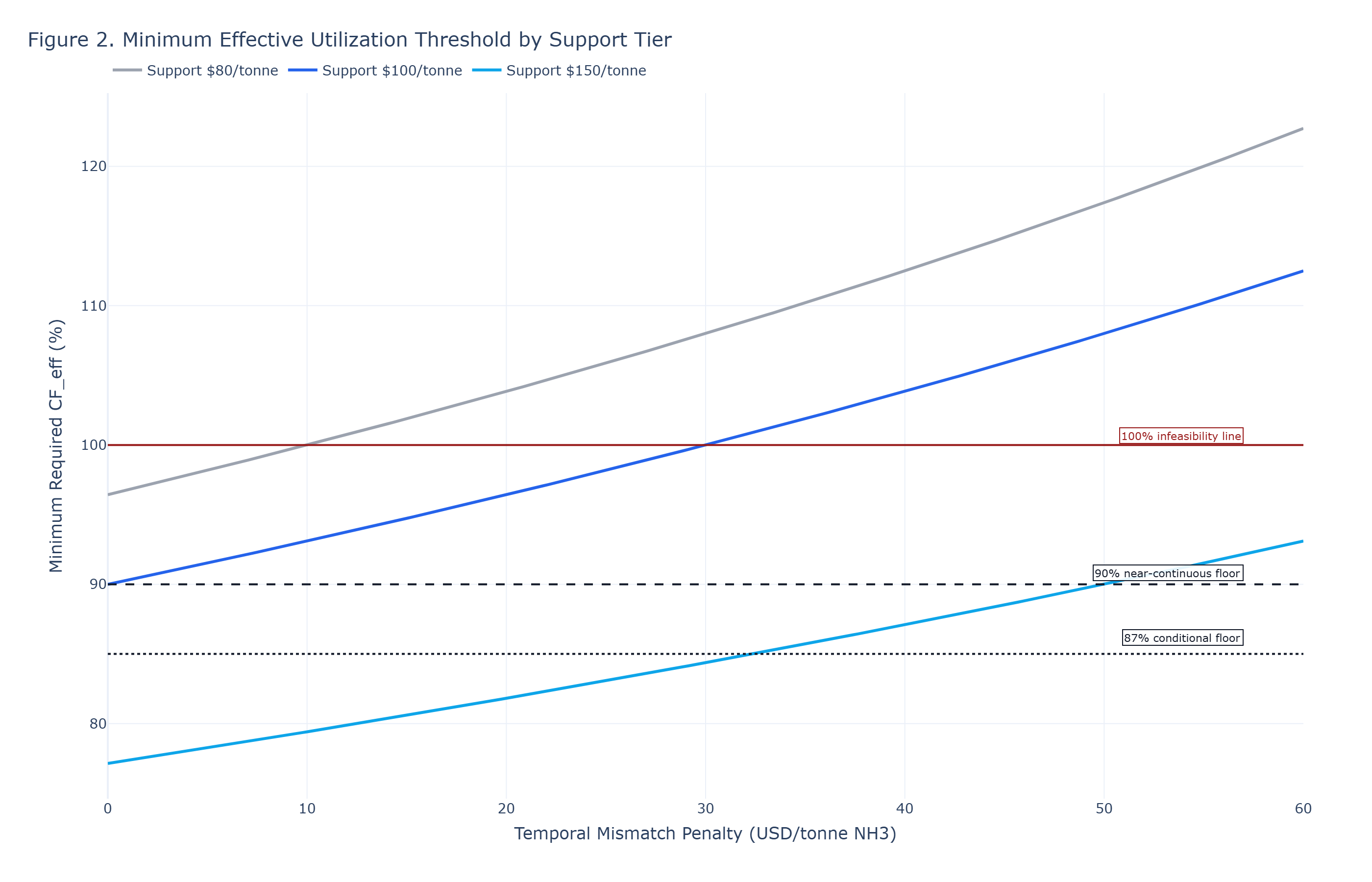
Figure 2: `CF_eff_min` threshold curves by support tier and temporal-penalty regime.
Decision statement
- Support-tier downgrades shift persistence requirements into near-continuous utilization regimes that are difficult to sustain operationally.
Figure 3 - Decision Exposure Matrix
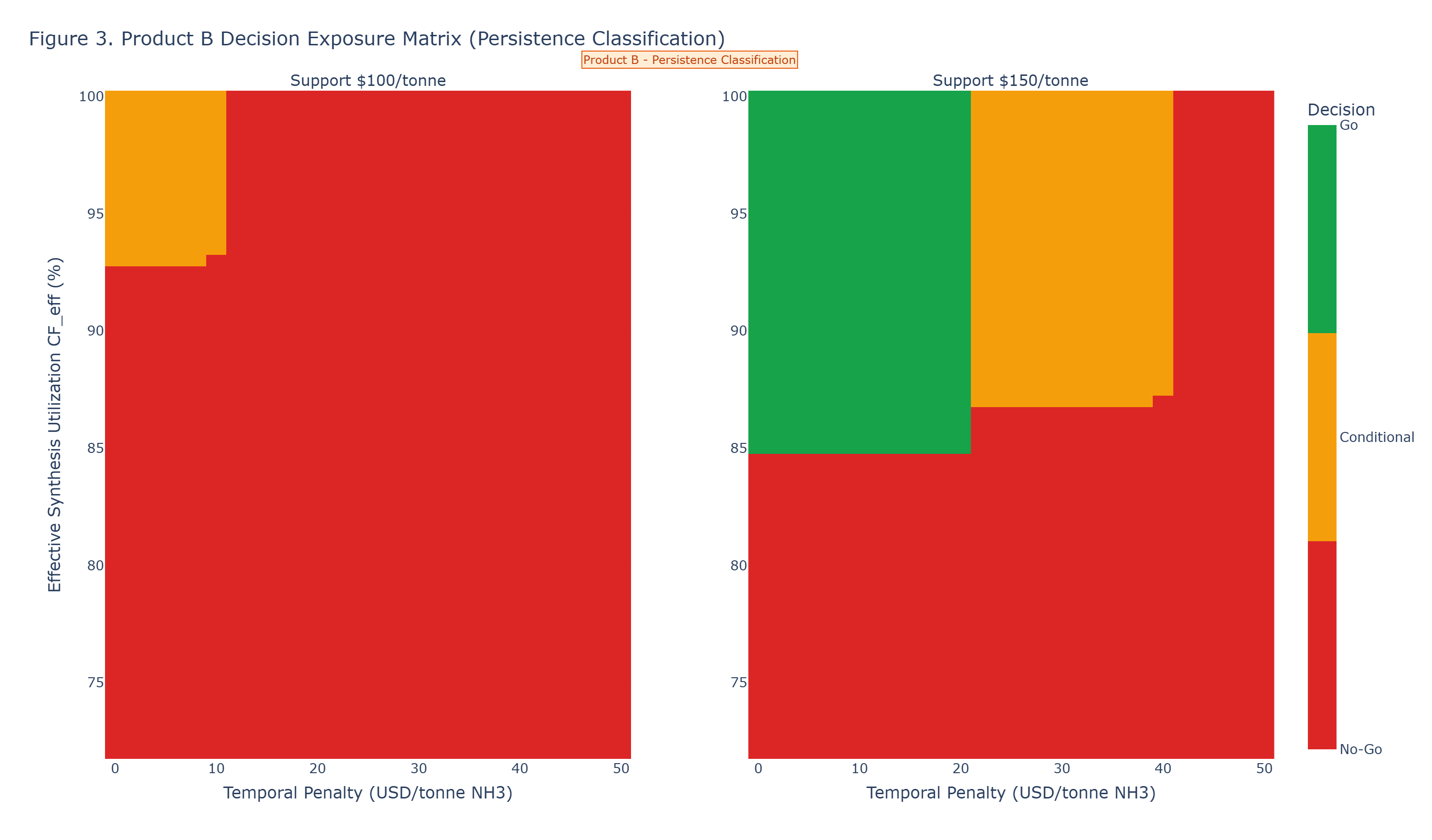
Figure 3: Go / Conditional Go / No-Go exposure classes under utilization, temporal mismatch, and support combinations.
Decision statement
- Cases that appear parity-positive at steady state become No-Go when utilization and temporal constraints are treated as endogenous.
5. Invalidation Link to Product A
This Product B note explicitly invalidates portions of Product A’s parity-defined region by adding temporal mismatch and utilization stress. Cases that satisfy Product A at steady state may fail once CF_eff and temporal penalties are treated as endogenous outcomes.
Product A answers where parity can exist; Product B enforces whether that region survives real operating constraints.
Projects that enter Temporal Decoupling Failure Regime should be classified as non-viable for capital allocation.
In DG-PFF handling, this regime is a direct No-Go classification unless structure is redesigned.
6. Dominant Fragility Drivers (Ranking)
- Effective synthesis utilization (
CF_eff) - Temporal penalty (
$/tonne-NH3) - Realized policy-credit support (
$/tonne-NH3) - Delivered hydrogen cost (
$/kg-H2)
7. Traceability and Methodology Disclosure
- Current artifact anchors:
assets/data/notes/clean-ammonia-fragility-temporal-mismatch-collapses-viability/README.mdassets/img/notes/clean-ammonia-fragility-temporal-mismatch-collapses-viability/README.md
- Generated publication data files (current deterministic package):
assets/data/notes/clean-ammonia-fragility-temporal-mismatch-collapses-viability/ammonia_fragility_inputs.jsonassets/data/notes/clean-ammonia-fragility-temporal-mismatch-collapses-viability/ammonia_fragility_scenarios.csvassets/data/notes/clean-ammonia-fragility-temporal-mismatch-collapses-viability/ammonia_fragility_thresholds.csv
- Methodology disclosure: deterministic threshold algebra only; no cycling degradation model, and no stochastic persistence treatment in this release.
8. Scope and Limitations
- Simplified fixed/variable decomposition for screening implementation.
- Hour-resolved dispatch is represented through validated 8760 input profiles; full dynamic plant simulation remains out of scope.
- Collapse thresholds are conditional on the central H2 value embedded in
V; joint re-solving with Product A H2-cost variation is required for non-default H2 cases. - No project-specific storage degradation or compressor-cycle modeling yet.
9. Publication Completion Checklist
- DG-PFF execution trace included in decision brief
- Kill-condition callout format aligned
- Structural Claim and Constraint Statement included
- Confidence / robustness tag included
- Figure blocks include per-figure decision statements
- Numbered Product B audit-trail structure included
- Data-file traceability anchors included
- Final figure assets exported to
assets/img/notes/clean-ammonia-fragility-temporal-mismatch-collapses-viability/ - Final data package generated and locked in
assets/data/notes/clean-ammonia-fragility-temporal-mismatch-collapses-viability/ - Hour-resolved dispatch and temporal-penalty calibration completed
- Jurisdiction-specific credit realization scenarios finalized