The Utilization Floor: Why Intermittent Power Can Break Industrial-Scale Economics
Why cheap intermittent electricity can become expensive when continuous industrial assets cannot maintain utilization.
IQ-AN-GEN-2026-01 · 2026-06-19 · v2.1 · 12 min read
Plain-English takeaway
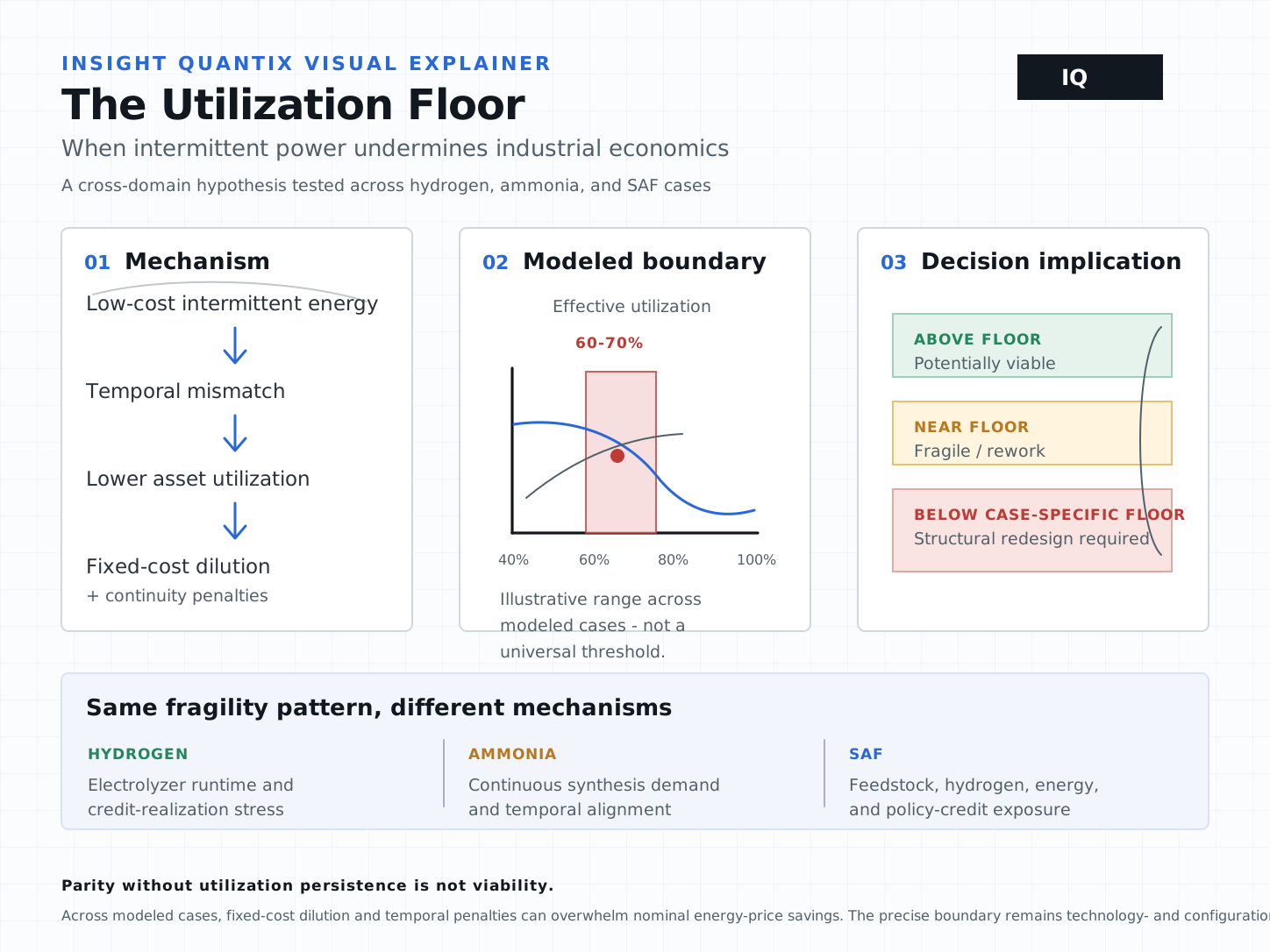
Cheap intermittent electricity does not guarantee low industrial cost. Across the modeled hydrogen, ammonia, and SAF cases, economic viability deteriorates sharply as effective utilization approaches roughly 60-70%. The precise minimum viable utilization boundary is configuration-dependent; utilization at or above roughly 85% is only a proceed case when delivered power and penalty thresholds also hold.
Why this matters
Hydrogen, ammonia, and SAF systems express related capital-utilization fragility through different physical mechanisms. Variable supply, input volatility, or continuity-sensitive demand must be reconciled with capital-rigid assets; storage, firming, curtailment, cycling, replacement power, and supply exposure can erase the apparent advantage of cheap nominal inputs.Parity without utilization persistence is not viability.
Permanent citation rule: cite the named version, stable publication date, URL, and access date. Updated benchmark, policy, sensitivity, method, threshold, or conclusion changes are versioned.
Version note: v2.1 updates structure, navigation, terminology, and visual presentation. The modeled thresholds and documented cross-domain evidence are unchanged; this revision is not a new market-price or policy determination.
Decision
Decision Summary
PROCEED: Effective utilization at or above roughly 85%, delivered electricity at or below roughly $45/MWh, temporal penalties within the relevant domain-specific low band, and no fragile support dependence.
CAUTION: Parity holds, but threshold distance is narrow and downside underwriting is required.
REWORK: Viability depends on high support realization, high storage burden, or delivered electricity above roughly $55/MWh.
NO-GO: Effective utilization near or below the modeled 60-70% failure range, temporal penalties above the relevant domain-specific high band, or parity failure under partial support loss.
What drives the result
Fixed-cost dilution: Lower effective utilization spreads capital recovery across fewer productive units.
Temporal penalties: Storage CAPEX and losses, curtailment or replacement power, turndown, cycling, and interaction effects compound as utilization declines.
Four-way trade-off: Low-cost electricity, high utilization, minimal storage or firming burden, and continuity cannot all be optimized simultaneously.
Cross-domain mechanism: Hydrogen, ammonia, and SAF cases show a recurring utilization-bound failure pattern through different operating constraints.
Decision
Kill Conditions
Treat the following modeled conditions as No-Go signals unless procurement, storage, process integration, or project architecture changes:
Effective utilization falls into the modeled 60-70% failure range, with the exact boundary determined by configuration.
Temporal penalties exceed the domain-specific high band after unit normalization.
Parity survives only under full-credit realization and fails under partial-loss cases.
The calculated minimum effective utilization exceeds 100%. No operating strategy within the stated assumptions preserves parity.
Method
Technical Note (Audit Trail)
The sections below preserve the governing equations, utilization-threshold form, temporal-penalty decomposition, decision boundaries, figures, and cross-domain evidence supporting the screening hypothesis.
Model form
Net Unit Cost ≈ Cvar + Cfixed × (CFref / CFeff) + Temporal Penaltytotal - Realized Policy Credit
Interaction term across utilization decline, storage strain, and cycling frequency
Cross-note disclosure: P_interaction(...) is an extension used in this cross-domain generalization layer; domain-specific ammonia decompositions remain additive in their published template form.
Temporal penalties are not additive adjustments; they compound and scale with utilization decline, forming the dominant cost driver below the utilization threshold.
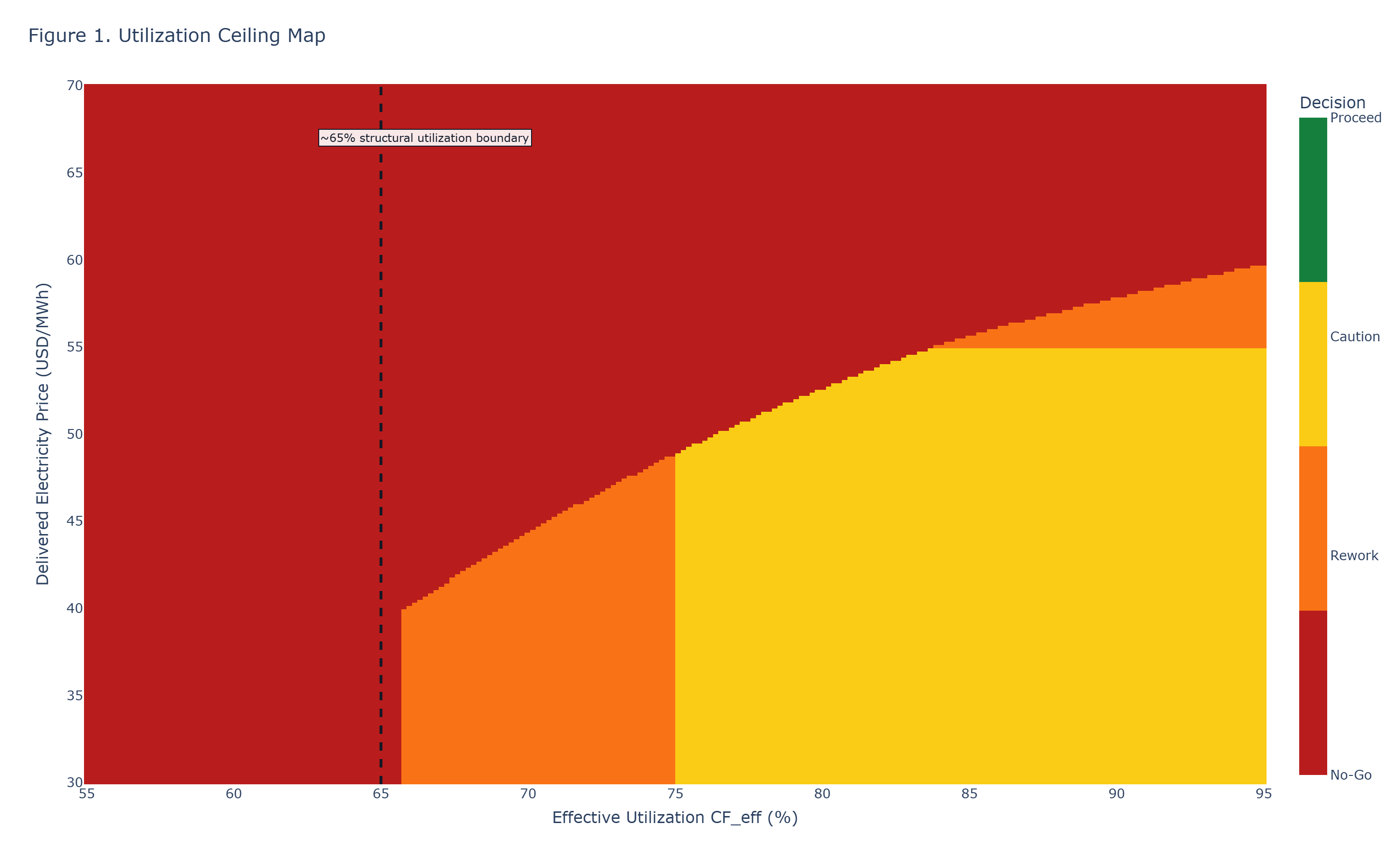
Figure 1 - Minimum Viable Utilization Map
Figure 1 maps effective utilization against delivered power cost. Read the collapsed region as a modeled structural boundary, not a universal threshold result.
Figure 1: Minimum viable utilization and delivered-power boundary map separating viable, conditional, and collapsed operating regions.
Decision statement
Viability contracts rapidly once utilization drifts below structural floors, even under favorable nominal power prices.
The viable operating region collapses from a broad cost space into a narrow band of high-utilization, partially firmed conditions.
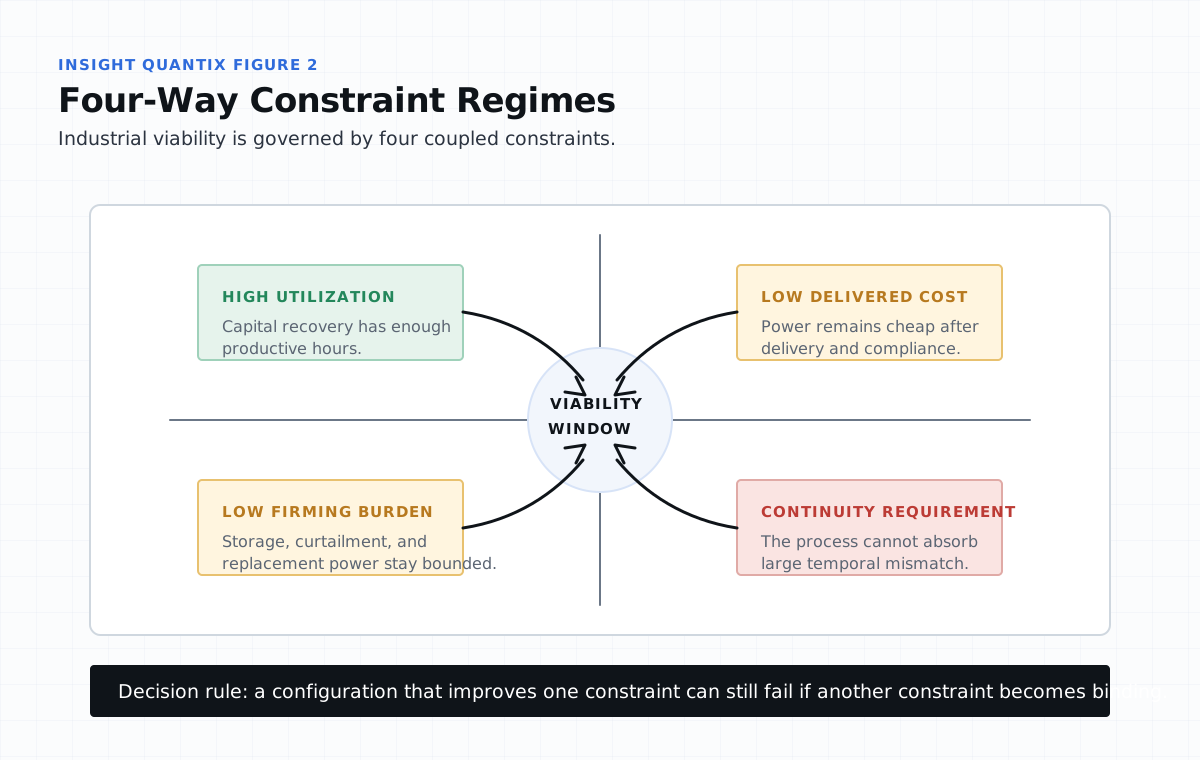
Figure 2 - Four-Way Constraint Regimes
Figure 2 shows the four coupled constraints that determine whether cheap intermittent power can support an industrial asset: utilization, delivered power cost, storage or firming burden, and continuity.
Figure 2: Four-way trade-off across utilization, delivered power cost, storage or firming burden, and continuity.
Decision statement
Configurations that optimize one dimension of the four-way trade-off force binding deterioration in at least one other dimension.
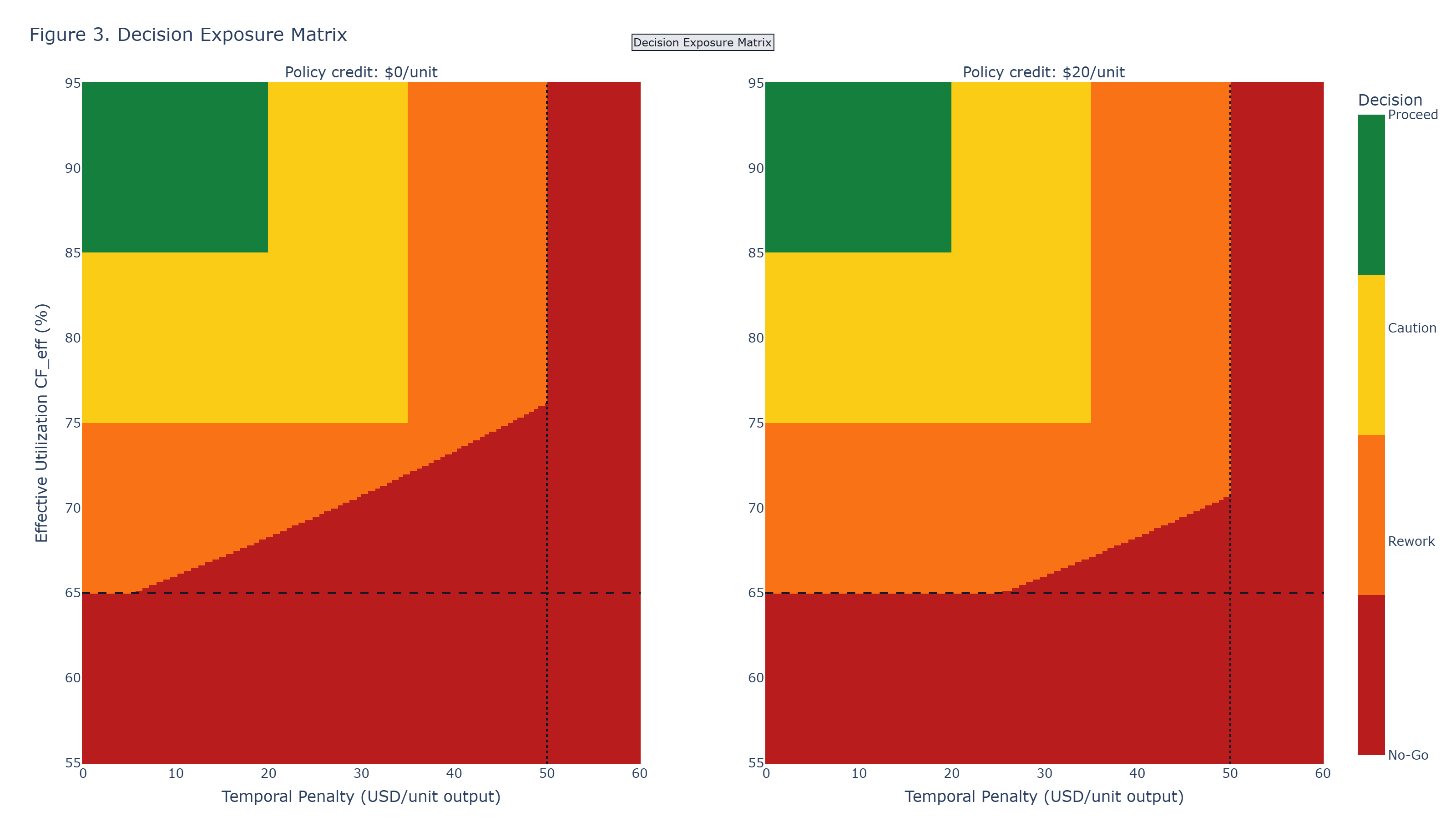
Figure 3 - Decision Exposure Matrix
Figure 3 translates utilization and temporal-penalty combinations into Proceed, Caution, Rework, and No-Go states.
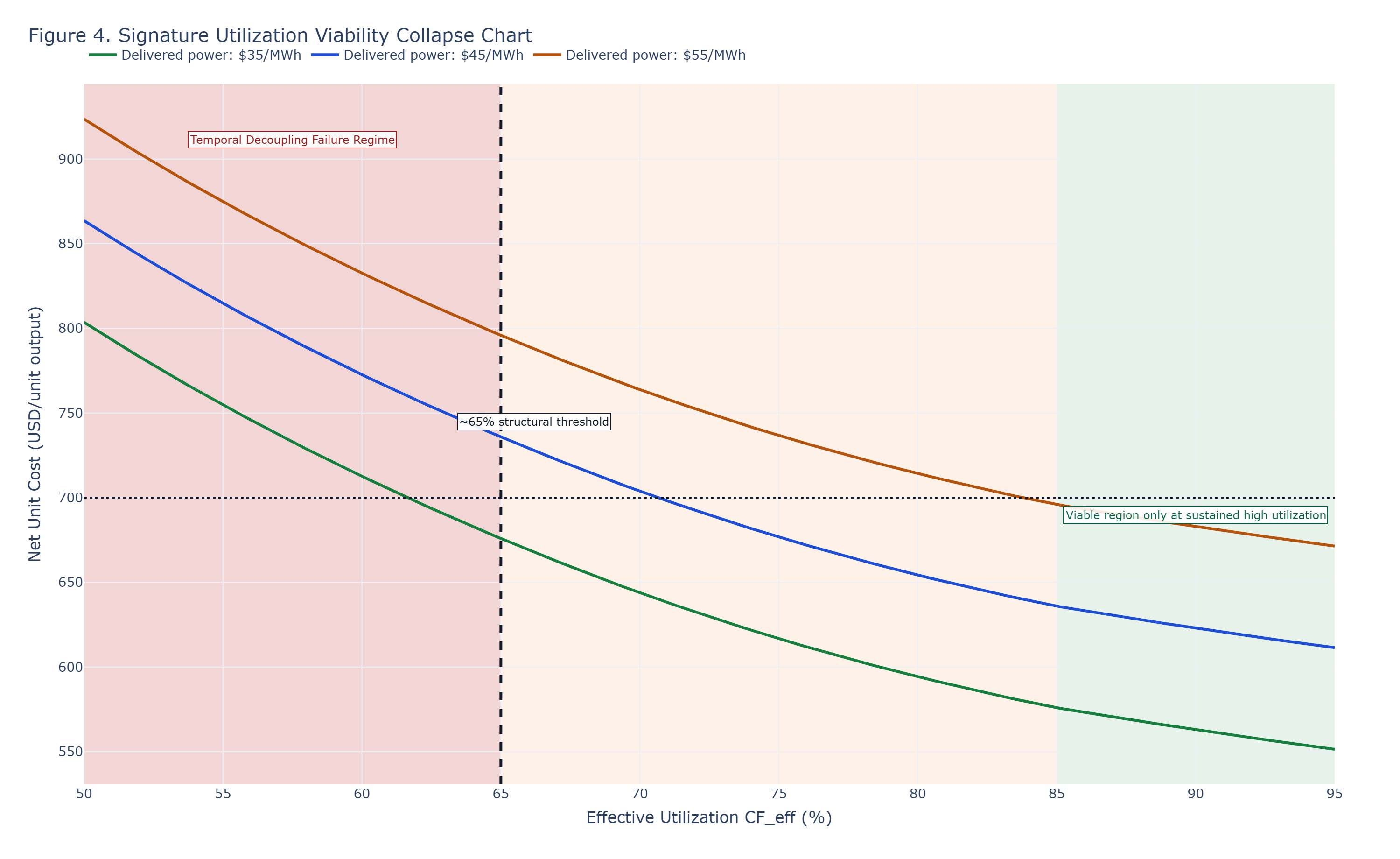
Figure 4 is retained as a legacy screening figure; interpret the threshold as an approximate modeled range rather than a universal constant.
Figure 4: Signature chart for analytical screening - effective utilization vs net cost with explicit collapse near the modeled 60-70% failure range.
Decision statement
This chart is the fast-screen visual: near the modeled ~60-70% effective-utilization range, fixed-cost dilution and temporal penalties can overwhelm nominal energy-price savings in the selected delivered-power cases.
Entry into Temporal Decoupling Failure Regime indicates a configuration-specific need for redesign, not a minor performance adjustment.
Context
Evidence Status and Scope
This note is a cross-domain synthesis of previously published Insight Quantix cases. It should be read as a screening hypothesis, not independent empirical validation. The modeled cases support a recurring utilization-bound failure pattern; additional technologies, project data, and external benchmarks are needed to test its generality.
The approximate 60-70% boundary is an observed modeled range across selected cases, not a universal constant.
Hydrogen, ammonia, and SAF are compared after translating each case into a utilization-sensitive capital-recovery frame.
Domain-specific mechanisms remain distinct: electricity availability, continuous synthesis demand, and feedstock or hydrogen supply exposure are not interchangeable.
Confidence is moderate for the screening pattern and lower for any universal threshold claim.
Hydrogen: 45V parity fails when effective utilization weakens and temporal penalties remove margin.
SAF: feedstock, hydrogen, and policy dependencies tighten simultaneously; viability collapses under realistic utilization and timing constraints.
Ammonia: continuous synthesis demand forces temporal alignment requirements that drive rapid entry into Temporal Decoupling Failure Regime.
These are not identical failures. They are related expressions of a recurring utilization-bound failure pattern. Intermittent power is not a cost advantage unless it can sustain utilization above the configuration-specific minimum required by the industrial system.
Inputs and thresholds: See linked artifacts in assets/data/notes/utilization-ceiling-intermittent-power-breaks-industrial-scale-economics/.
Reproducibility note: Boundary behavior is most sensitive to effective utilization, delivered power cost, temporal-penalty stack behavior, and policy-credit realization assumptions.
Disclosure: Insight Quantix derived all analytical conclusions independently; external references provide context. The cross-domain boundary should be read as a screening hypothesis pending broader independent validation.
Reference
How to Cite This Analytical Note
APA Format
Gomez, J. R. (2026). The Utilization Floor: Why Intermittent Power Can Break Industrial-Scale Economics (Insight Quantix Analytical Note IQ-AN-GEN-2026-01, v2.1). Retrieved from https://insightquantix.com/utilization-ceiling-intermittent-power-breaks-industrial-scale-economics.html
Chicago Format
Gomez, Jamie R. "The Utilization Floor: Why Intermittent Power Can Break Industrial-Scale Economics." Insight Quantix Analytical Note IQ-AN-GEN-2026-01, v2.1, June 2026. https://insightquantix.com/utilization-ceiling-intermittent-power-breaks-industrial-scale-economics.html.
BibTeX
@techreport{Gomez2026_UtilizationFloor,
  author = {Gomez, Jamie R.},
  title = {The Utilization Floor: Why Intermittent Power Can Break Industrial-Scale Economics},
  institution = {Insight Quantix},
  year = {2026},
  type = {Analytical Note},
  number = {IQ-AN-GEN-2026-01},
  month = jun,
  url = {https://insightquantix.com/utilization-ceiling-intermittent-power-breaks-industrial-scale-economics.html}
}
Method
Appendix A: Modeling Parameters
Model form: See governing equations and threshold definitions in the technical section of this note.
Primary data artifacts: assets/data/notes/utilization-ceiling-intermittent-power-breaks-industrial-scale-economics/
Reproducibility scope: This appendix anchors file locations and parameter traceability for decision-grade review.
Reference
About the Author
Jamie R. Gomez, Ph.D.
Principal, Insight Quantix
Chemical engineer specializing in decision-grade techno-economic analysis (TEA) and life cycle assessment (LCA) for hydrogen, sustainable aviation fuels, and power-to-liquids pathways. She translates process-level engineering models into cost, emissions, and uncertainty insights that inform capital allocation and technology scale-up decisions. Her prior work has supported technology cost-target modeling, scale-up analysis, and decision-oriented TEA/LCA efforts across federally funded clean-energy programs, including collaborations with Sandia National Laboratories, the National Renewable Energy Laboratory, ARPA-E, and clean-energy companies. She holds a PhD in chemical engineering with research focused on electrochemical materials fabrication.
Insight Quantix publishes independent analytical work for transparency, education, and decision clarity. The analysis examines benchmark-anchored, audit-defensible economic risk conditions as public scholarly research.
Legal Disclaimer This analytical note is provided for informational and educational purposes only and does not constitute investment advice, financial advice, engineering design recommendations, or legal interpretation of tax policy. Readers should conduct independent due diligence and consult qualified professionals before making capital allocation decisions. The analysis reflects representative scenarios based on stated modeling parameters and should not be construed as a guarantee of project performance or economic outcomes. Specific project economics require site-specific analysis accounting for local conditions, technology configurations, and regulatory environments. Insight Quantix makes no warranties, express or implied, regarding the accuracy, completeness, or reliability of this information for any particular purpose.
The visual explainer is the compact version of the updated argument: intermittent inputs can lower utilization, dilute fixed-cost recovery, and create temporal penalties. The 60-70% band is an illustrative modeled range, not a universal threshold.